Wheelchair vs me
- Olivia Dennis

- Jun 26
- 3 min read
Updated: Aug 3

Time for a really real one….
I’m a Christian. My relationship with Jesus means everything to me. But honestly, I’m frustrated by the stigma surrounding chronic illness—especially within the church.
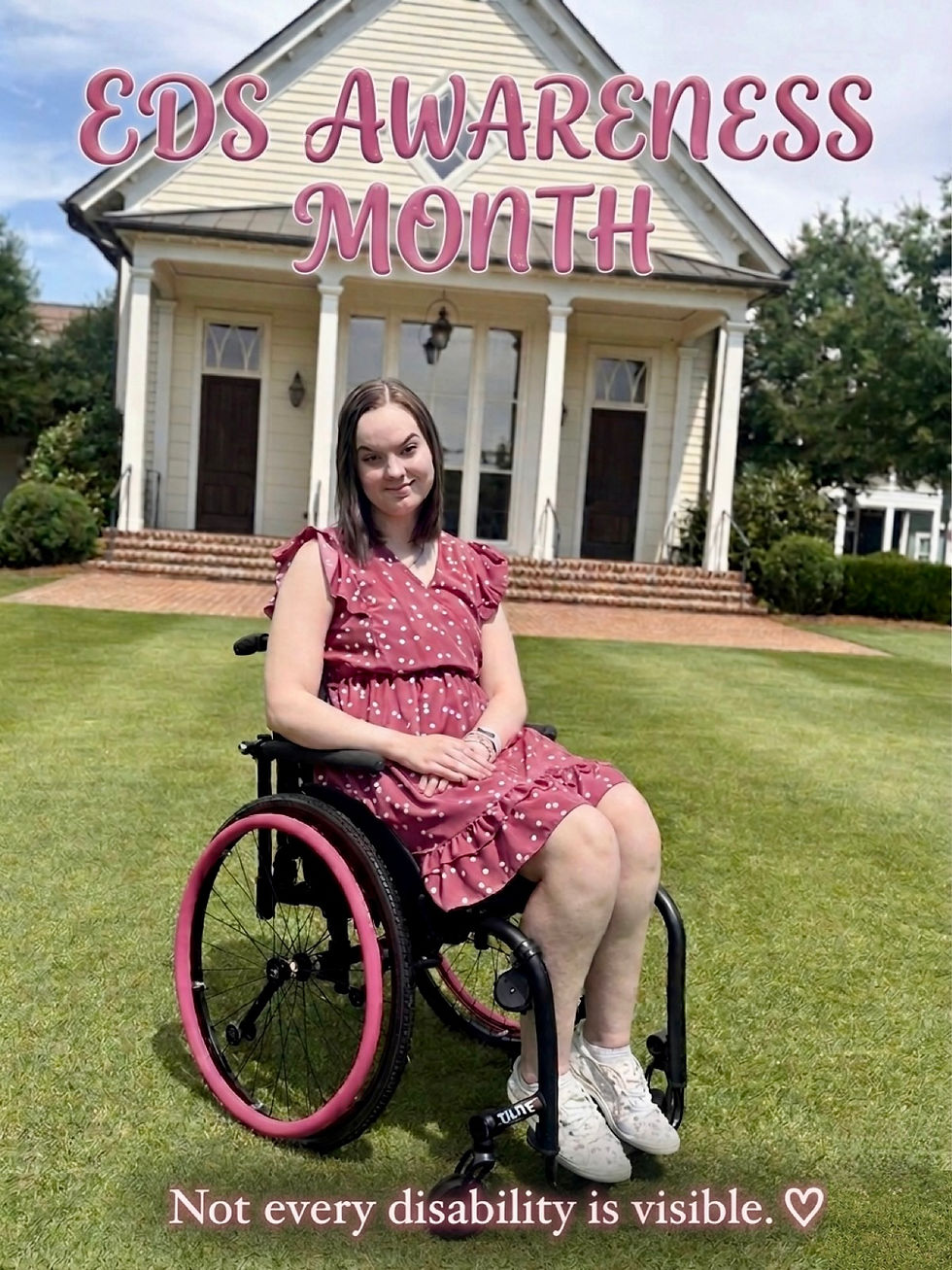
Why do people treat me differently the moment they see a wheelchair?
Where are the boundaries?
At church, I’ve had someone grab my wheelchair and refuse to let go, even after I repeatedly said no and told him I didn’t want help. Taking control of someone’s wheelchair without permission is like taking away their ability to use their own legs.
I’ve seen shocked expressions. Questions like, “What happened?” and “What’s wrong?” I’ve had people tell me they “hate seeing me in a wheelchair” when I actually use one regularly. It’s as if people assume something dramatic must have happened simply because they can now see part of my struggle.
Suddenly, people pity me. They rush to help in ways I didn’t ask for. They tell me they’re praying “extra hard” for me because they saw the wheelchair. I’ve gone up for prayer and been told my illnesses could be the result of a generational curse in my family, along with other comments that crossed boundaries they never should have crossed. I’ve heard comments about needing more faith, praying harder, or believing in healing more. It leaves me feeling guilty.
Why does seeing a wheelchair suddenly make people think they know everything about my health, my faith, and my relationship with God?
And honestly, this isn’t just about wheelchairs. I’ve experienced similar assumptions when using a cane, needing accommodations, leaving events early, declining activities, or simply being honest about my health. The wheelchair just makes those assumptions more obvious.
The irony is that I often struggle more on the days I’m using my cane and pushing through severe symptoms than I do on the days I use my wheelchair. But people don’t see that. They only react when they see something visible.
That’s one of the hardest parts of living with chronic illness and disability. People often respond to what they can see while overlooking the countless struggles they can’t. So much of our daily reality remains invisible until a mobility aid, accommodation, or visible symptom brings it to the surface.
I’m still the same person.
My faith hasn’t changed.
My love for Jesus hasn’t changed.
My diagnoses haven’t suddenly gotten worse because I’m using a mobility aid.
I know chronic illness is often invisible. I know most people mean well. But it hurts to constantly feel analyzed, pitied, questioned, or turned into a project to fix the moment someone sees evidence of my disability.
What hurts almost as much as the comments themselves is that many people don’t actually ask how I’m doing. They decide how I’m doing.
They see a wheelchair and decide my life must suddenly be harder than it was yesterday.
They see a wheelchair and decide I need more prayer than usual.
They see a mobility aid and create a story about me without ever asking if that story is true.
Very few people stop and ask, “How are you actually doing?”
Very few people ask what my wheelchair means to me, how often I use it, or how it’s helping me.
Instead, assumptions fill in the gaps.
People start looking at me differently.
Talking to me differently.
Praying for me differently.
Thinking about me differently.
And honestly, that’s incredibly uncomfortable.
Church has been a safe place for me in many ways, which is exactly why this hurts so much.
I don’t want assumptions or pity. I don’t want people deciding what my life must look like based on whether I’m standing, using a cane, or sitting in a wheelchair.
I want people to ask instead of assume. I want people to listen instead of decide. I want people to respect my boundaries when I say no. I want people to understand that chronic illness is not a lack of faith, a punishment, a curse, or a spiritual failure.
A wheelchair isn’t a tragedy for me—it’s a tool that helps me participate in life.
My mobility aids are a big part of my life, but they are not my identity.
I just want to be seen as a whole person.
I am not a project to fix.
I am not simply a prayer request.
I’m Olivia.
PS: I love my church so so much. It’s a blessing and they are incredible. This is not directed towards them at all, but just a way to express the hurt certain people can unintentionally bring in settings like this. Thanks for reading

Comments